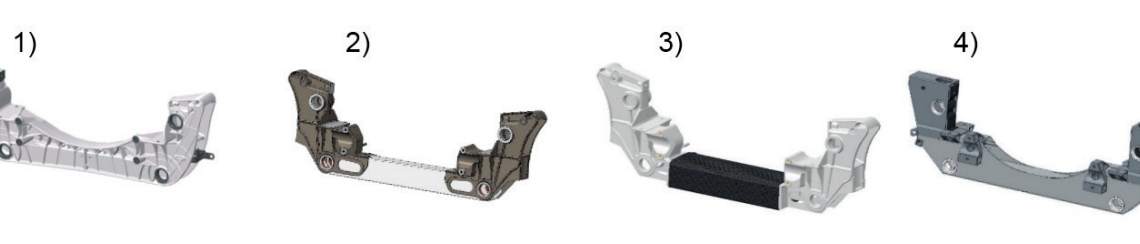
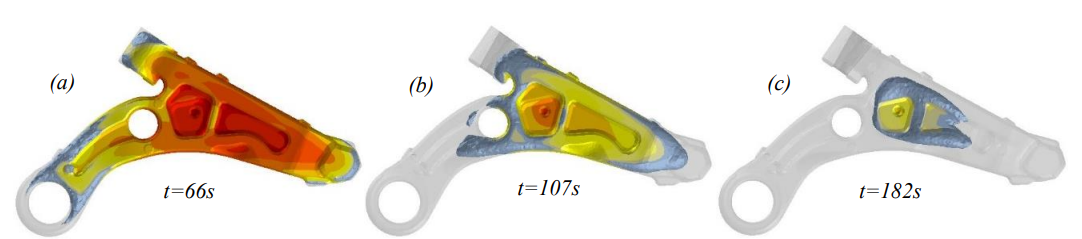
S. Cecchel, D. FerrarioThe purpose of the present paper is to enhance and deepen the lightweight optimization in automotive, in particular for commercial vehicles and buses. In detail, aim of this research is to develop a technically reliable and cost effective safety component for Light Commercial Vehicles (LCVs) in aluminum alloy. At this purpose, different
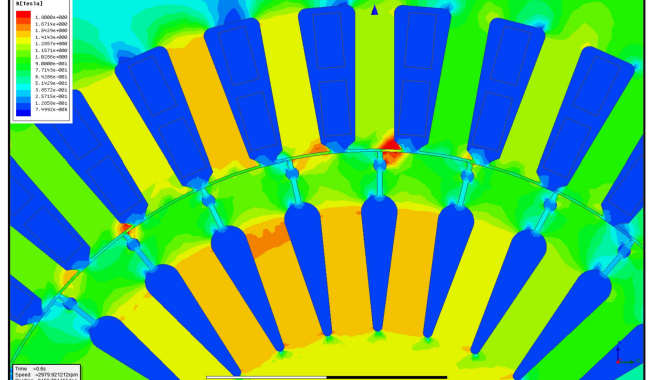
Ashwin D; Ashok S; Manglesh Dixit; Vinila Chavan All Authors Abstract This paper describes the design and simulation of 15 kW, 2 pole, 50 Hz, three phase induction motor to achieve IE4 efficiency level as defined by the International Electrotechnical Commission (IEC). For achieving higher efficiency, the motor is designed, optimized and simulated with copper die-cast rotor and
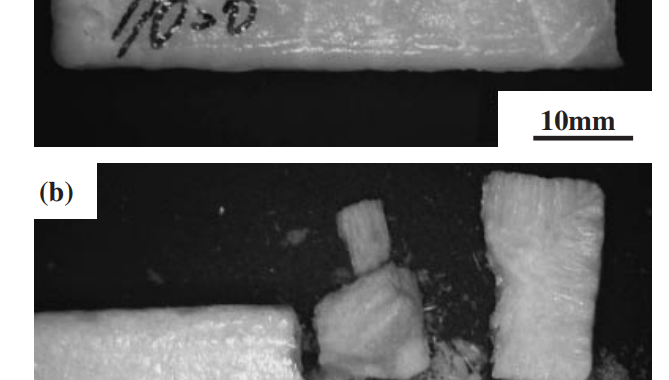
Jun Yaokawa, Daisuke Miura, Koichi Anzai, Youji Yamada, Hiroshi Yoshii Abstract The strength of four binary systems NaCl–Na2CO3, KCl–K2CO3, KCl–NaCl and K2CO3–Na2CO3 was investigated in order to develop expendable salt core for high pressure die casting processes. Four point bending test was conducted to determine the strength of specimens made from molten salts by using the permanent mold casting technique.
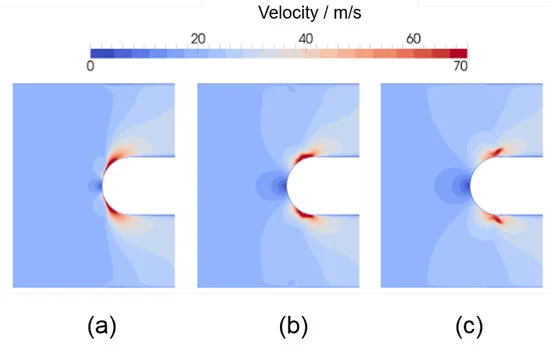
B. Fuchs and C. KörnerPublished Online:February 10, 2014pp 24-30 Abstract High pressure die casting is limited in its geometry since a lost core technology as with sand or low pressure casting is not state-of-the art. Using lost cores made from sodium chloride may be a solution for high pressure die casting. Due to the high dynamical forces
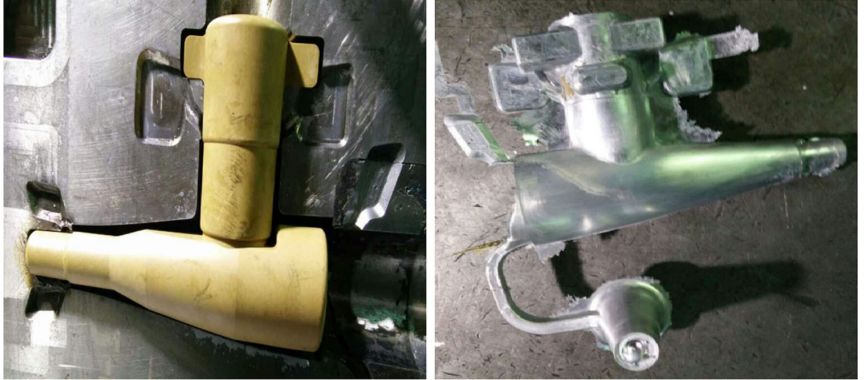
Renhe Huang &aamp; Baoping Zhang International Journal of Metalcasting volume 11, pages440–447 (2017)Cite this article Metricsdetails Abstract Soluble salt cores have been successfully used for the die casting of aluminum and magnesium alloys. However, it has not been reported that the soluble salt cores were used for zinc alloy die casting. In this paper, a soluble salt core system
Xiaolong Gong, Fuchu Liu, Xinwang Liu, Wenming Jiang & Zitian Fan International Journal of Metalcasting (2022)Cite this article Abstract A composite inorganic salt core with good water solubility and formability was proposed using potassium nitrate (KNO3) and potassium chloride (KCl) as base materials. The KNO3–KCl molar ratio has been optimized for the KNO3–KCl composite salt core, and
by Sebastian Kohlstädt 1,2,Michael Vynnycky 1,3,* andStephan Goeke 41Division of Processes, Department of Materials Science and Engineering, KTH Royal Institute of Technology, Brinellvägen 23, 100 44 Stockholm, Sweden2Volkswagen AG—Division of Components Manufacturing, Dr. Rudolf-Leiding-Platz 1, 34225 Baunatal, Germany3Department of Mathematics and Statistics, University of Limerick, Limerick V94 T9PX, Ireland4Institute of Mechanics, Kassel University, Mönchebergstr. 7, 34125 Kassel, Germany*Author to whom
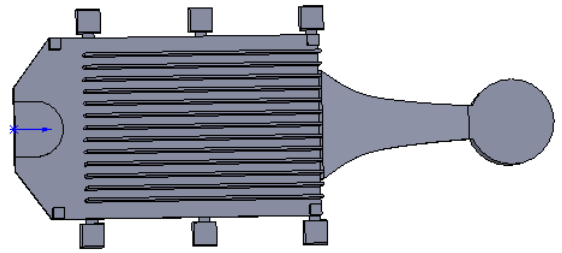
Sitao Chen1 and Feng Zhou1 Published under licence by IOP Publishing LtdJournal of Physics: Conference Series, Volume 2044, The 2nd International Conference on Advanced Materials and Intelligent Manufacturing (ICAMIM 2021) 20-22 August 2021, Nanning, ChinaCitation Sitao Chen and Feng Zhou 2021 J. Phys.: Conf. Ser. 2044 012144 Abstract According to the structural characteristics of the radiator, two different gate structures were designed. The
J Ou1, C Wei1,2, D Maijer1, S Cockcroft1, L A2, Y Zhang2, Z Chen2 and Z Zhu2 Published under licence by IOP Publishing LtdIOP Conference Series: Materials Science and Engineering, Volume 861, MCWASP XV: International Conference on Modelling of Casting, Welding and Advanced Solidification Processes 22-23 June 2020, Jönköping, SwedenCitation J Ou et al 2020 IOP Conf. Ser.: Mater. Sci. Eng. 861 012030 Abstract Die (permanent) casting is one of the
Jaroslav Beòo, Eli{ka Adámková, Franti{ek Mik{ovský, Petr JelínekV[B-Technical University of Ostrava, Faculty of Metallurgy and Materials Engineering, Department of Metallurgy and Foundry, listopadu 15/2172, 708 33 Ostrava-Poruba, Czech Republicjaroslav.beno@vsb.czPrejem rokopisa – received: 2013-09-26; sprejem za objavo – accepted for publication: 2014-09-05 1 INTRODUCTION The application of salt cores for the pre-casting of casting cavities and