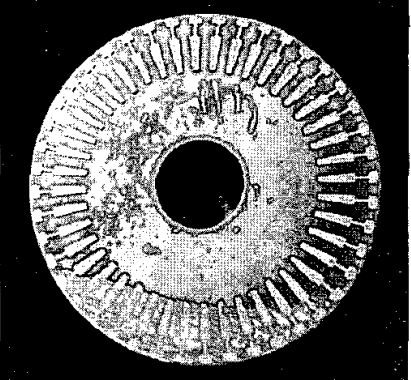
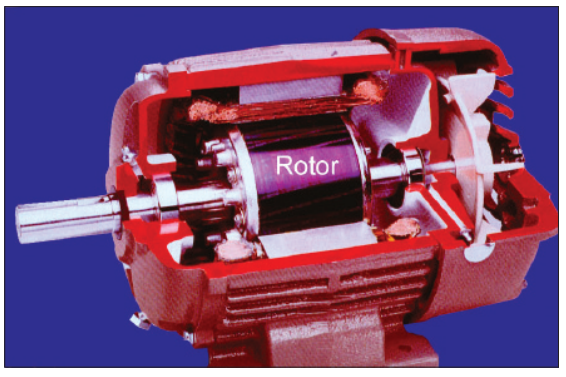
모터 성능 향상을 위한 다이캐스트 구리 로터 Authors J.G. CowieCopper Development Association Inc., New York, NY, USAD.T. BrenderCopper Development Association Inc., New York, NY, USA Abstract Aluminum has been the common conductor material for the squirrel cage of the induction motor largely because of ease of manufacturing by pressure die casting. Short die life in
John G. CowieCopper Development Associations Inc.New York, NY Dale T. PetersConsultant to CDA Inc.Hilton Head Island, SC Edwin F. Brush, Jr.Consultant to CDA Inc.Weston, MA Stephen P. MidsonFormcast, Inc.Denver, CO Articles on materials appearing in materials issues have generally focused on the common aluminum-, zinc- and magnesium-based die casting alloys. This report differs in that
다이캐스트 구리 모터 로터: 구리와 알루미늄 모터 테스트 비교 결과 Edwin F. BrushJr.John G. CowieDale T. PetersDarryl J. Van Son Abstract Motor manufacturers have long realized that because the electrical conductivity of copper is nearly 60% higher than that of aluminum, substituting copper for aluminum in the squirrel cage of the induction motor would markedly increase the electrical energy efficiency of the machine. Most
구리 다이캐스팅으로 IE4 효율 수준을 달성하기 위한 15kW, 2극 유도 전동기의 설계 최적화 Abstract This paper describes the design and simulation of 15 kW, 2 pole, 50 Hz, three phase induction motor to achieve IE4 efficiency level as defined by the International Electrotechnical Commission (IEC). For achieving higher efficiency, the motor is designed, optimized and
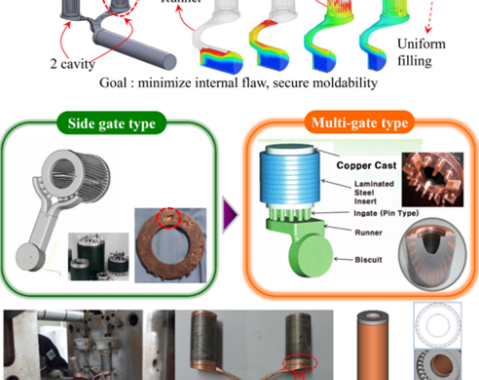
Daniel Liang, Xu Yang, Jiabin Yu, Victor Zhou Abstract This paper introduces the recent technological progress in China on the manufacture of die cast Copper Motor Rotors (CMR) for induction motors. This manufacturing process provides a simple and practical means for large-scale economical production of high-efficiency induction motors. Rotor die casting obstacles/solutions are presented along
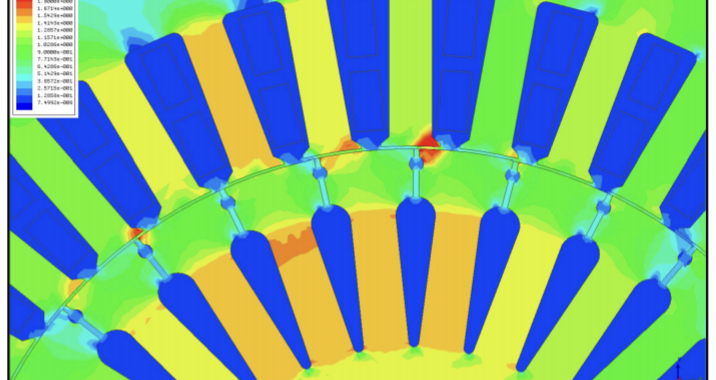
Do-Kwan Hong, Jae-Hak Choi, Pil-Wan Han, Yon-Do Chun, Byung-Chul Woo & Dae-Hyun Koo International Journal of Precision Engineering and Manufacturing volume 13, pages2251–2257 (2012)Cite this article Abstract This paper deals with the analysis techniques of a high speed and high efficiency 10 kW, 30,000 rpm rated induction motor. The induction motor has been analyzed by time-varying magnetic finite element
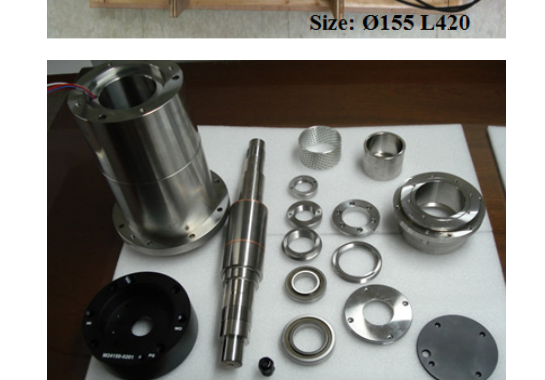
동 다이캐스팅 고속 유도전동기의 불평형 응답 해석 Abstract This paper deals with a copper die casting induction motor which has several advantages of motor performance. The developed motor is used as spindle motor in machining center. The dynamic characteristic analysis of rotor is dealt with for precision machining. The critical speed of rotor considering rotation
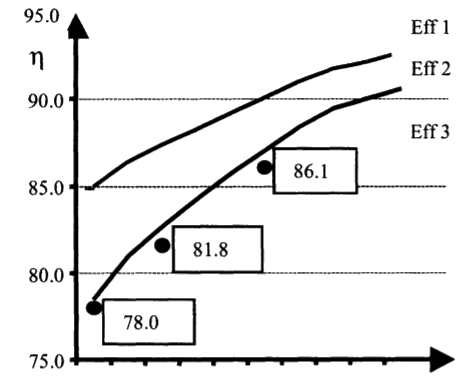
고효율 유도 전동기 설계 다이캐스팅 구리 로터 Francesco Parasiliti, Marco VillaniDepartment ofElectric Engineering, University ofL’Aquila, 67040 L’Aquila, Italy Abstract The paper deals with the use of copper cage in three-phase low voltage induction motors and gives a design guideline to optimize their efficiency, according to the new European classification scheme. An accurate motor design allows
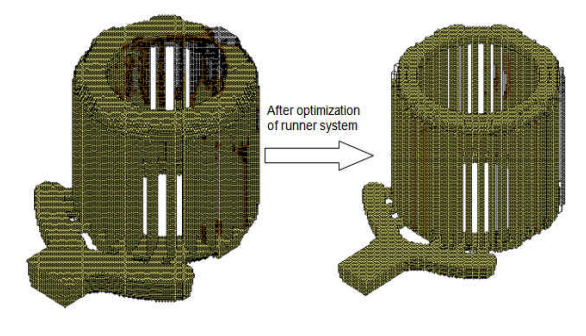
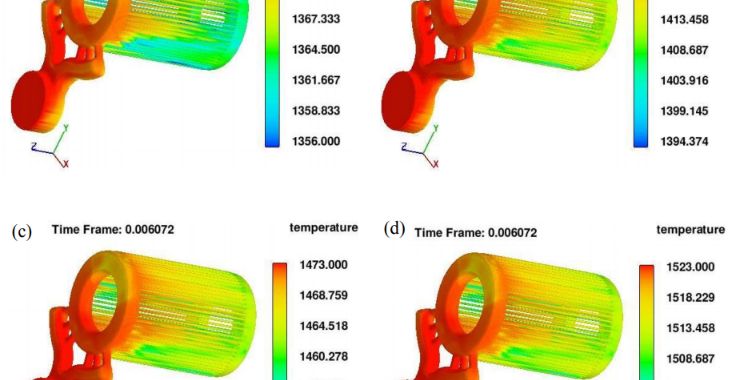
Ya’nan Wu1, a, Guojie Huang1, b, Lei Cheng1,c, Daniel Liang2,d, Wei Xiao1,e1State Key Laboratory of Nonferrous Metals and Processes, General Research Institute forNonferrous Metals, Beijing 100088, China2Motor System,International Copper Association Asia, Tian Zuo International Center,Beijing 100081, Chinaaynwu19@163.com, bhuangguojie@grinm.com, cchenglei@grinm.com,dDaniel.liang@copperalliance.asia, ewxiao@ustb.edu.cn Keywords: Numerical Simulation, Copper Rotors, FLOW-3D, Die Casting. Abstract The parametric optimization of process parameter
1. Overview: 2. Research Background: In metalcasting, cores are essential components utilized to create internal geometries and voids within cast products. The selection and performance of cores are significantly influenced by the casting technique employed, ranging from gravity casting to high pressure die casting. As component designs become increasingly complex and environmental regulations more stringent,