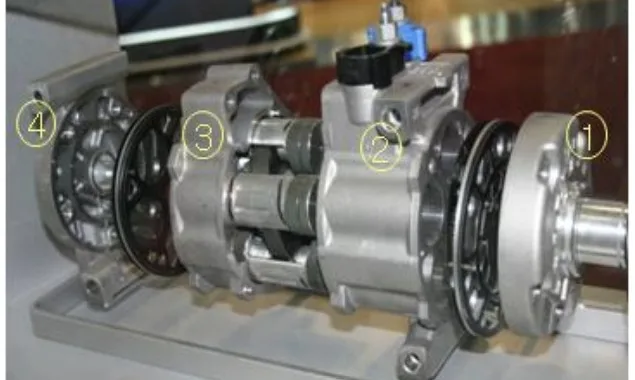
This article introduces the paper “Development of a Housing Component for an Auto-compressor Using Vacuum Ladling Die Casting” presented at the Transactions of Materials Processing. 1. Overview: 2. Research Background: 3. Research Purpose and Research Questions: 4. Research Methodology: 5. Main Research Results: 6. Conclusion and Discussion: 7. Future Follow-up Research: 8. References: 9. Copyright:
This article introduces the paper “[Casting of Combustion Engine Pistons Before and Now on the Example of FM Gorzyce]” 1. Overview: 2. Research Background: Social/Academic Context: Combustion engine pistons face increasingly stringent demands driven by the need for enhanced thermo-mechanical loads, reduced exhaust emissions, and improved fuel efficiency. The automotive industry’s push for lighter vehicles
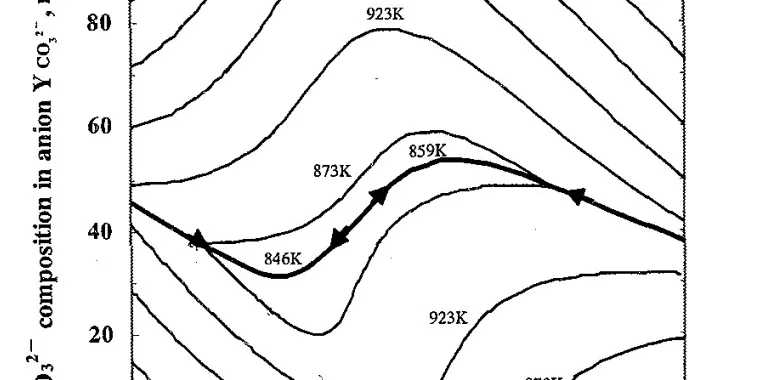
This article introduces the paper “Bending Strength of Salt Core Comprised of KCl-NaCl-Na2CO3-K2CO3 Systems” presented at the J. JFS, Vol. 79, No. 4 (2007) pp. 184~191 1. Overview: 2. Research Background: 3. Research Purpose and Research Questions: 4. Research Methodology 5. Main Research Results: 6. Conclusion and Discussion: 7. Future Follow-up Research: 8. References: 9.
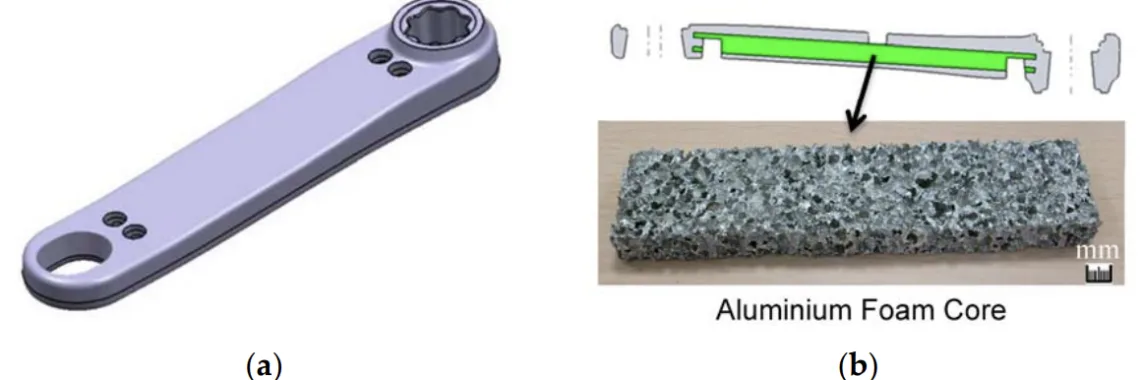
This article introduces the paper “Aluminium Foam and Magnesium Compound Casting Produced by High-Pressure Die Casting” presented in Metals, MDPI 1. Overview: 2. Research Background: In the automotive and transport industries, reducing vehicle weight is a primary focus to decrease fuel consumption and carbon dioxide emissions. Substituting traditional heavier materials like steel and iron with
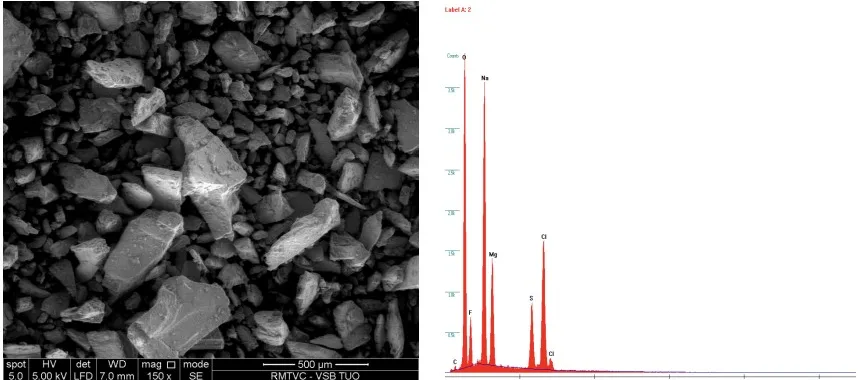
This article introduces the paper “Advances in Technology of Soluble Cores for Die Castings” presented at the Archives of Foundry Engineering 1. Overview: 2. Research Background: The increasing complexity of casting designs presents a significant challenge to traditional die casting methods that rely on simple metal cores. These existing methods struggle to meet the rising
This article introduces the paper “A water-soluble core material for manufacturing hollow composite sections presented in Composite Structures”. 1. Overview: 2. Research Background: Social/Academic Context of the Research Topic Core materials play a crucial role in composite structures by enhancing the second moment of area and improving bending stiffness. While foam materials are commonly used
This article introduces the paper “Feasibility of Metal Additive Manufacturing for Internal Combustion Engines” by Jamee Gray, submitted to the University of Kansas in 2020. 1. Overview: 2. Research Background: 3. Research Purpose and Research Questions: 4. Research Methodology 5. Main Research Results: 6. Conclusion and Discussion: 7. Future Follow-up Research: 8. References: 9. Copyright:
This article introduces the paper “Influence of Die Temperature in High Pressure Die Casting of Thin-Walled Components” by M. Wessén and L. Näslund: 1. Overview: 2. Research Background: 3. Research Purpose and Research Questions: 4. Research Methodology 5. Main Research Results: 6. Conclusion and Discussion: 7. Future Follow-up Research: 8. References: 9. Copyright: This material
This article introduces the paper “The DIRECTOOL Software – Tool Design on Facet Geometries with Decision Support” presented at the INTERNATIONAL CONFERENCE ON ENGINEERING DESIGN 1. Overview: Title: THE DIRECTOOL SOFTWARE – TOOL DESIGN ON FACET GEOMETRIES WITH DECISION SUPPORTAuthor: Dieter H. Müller, Claus Aumund-Kopp, Robert Weitzel, Axel SelkPublication Year: 2003Publishing Journal/Academic Society: INTERNATIONAL CONFERENCE
This article introduces the paper “Development of High Strength Al-Mg2Si-Mg Based Alloy for High Pressure Diecasting Process” presented as a thesis submitted for the degree of Doctor of Philosophy at Brunel University 1. Overview: 2. Research Background: The automotive industry is increasingly utilizing lightweight materials like aluminium alloys to enhance fuel efficiency and reduce CO2

![Fig. 2. Permanent mould casting machine for casting single pistons [8]](https://castman.co.kr/wp-content/uploads/image-272-841x380.webp)
![Figure 3.5: SEM images on the fracture surface of HPDC processed primary alloy showing: (a) gas pores, and (b) shrinkage pore. (adapted from [79])](https://castman.co.kr/wp-content/uploads/image-240-906x380.webp)
![Fig. 2.1 Graphical illustration of hot chamber diecasting [5].](https://castman.co.kr/wp-content/uploads/Fig.-2.1-Graphical-illustration-of-hot-chamber-diecasting-5-638x380.webp)